The Challenge
“Sometimes I open a blank page and immediately close it. I need something that helps me get going, even just an outline or a first version I can edit.”
From interviews with small business owners, creators, and bloggers
Wix users wanted to publish blog content more consistently, but writing was time‑consuming and often overwhelming. They also expected different things from AI. Some wanted a one‑click solution, others wanted inspiration and guidance on structure, tone, and SEO.
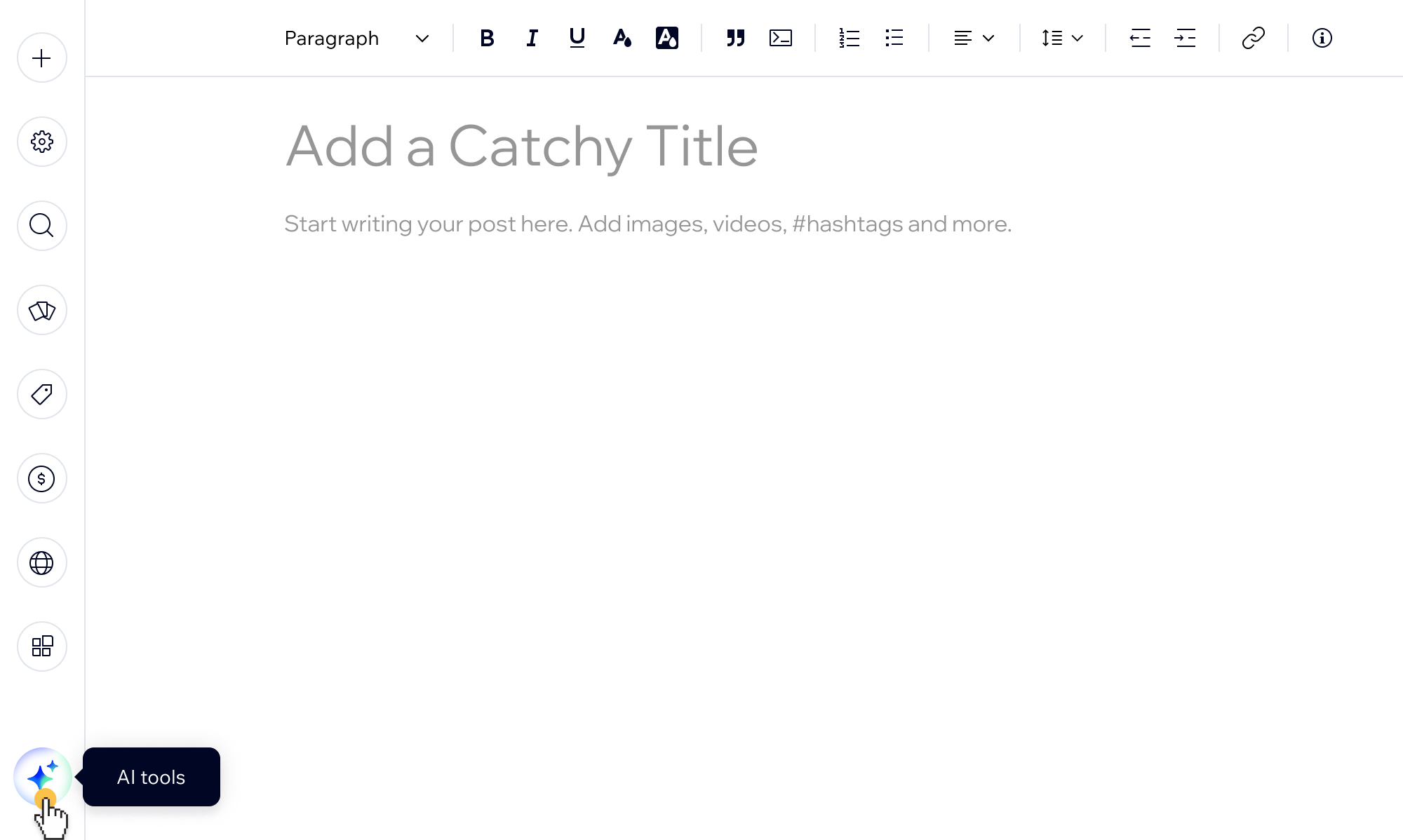
How might we help users overcome creative barriers and publish high‑quality blog content faster, in a single streamlined flow, while preserving their sense of authorship and keeping the experience reliable, light, and easy to recover from?
Competitor Research
No one offered a simple, end‑to‑end flow.
Most tools handle isolated actions like rewriting or summarizing. None guided users from ideation to a complete blog post.
7 features, 5 toolsSwipe to compare
| Feature | Wordpress | Squarespace | Duda | Notion | GrammarlyGO |
|---|---|---|---|---|---|
| Ask AI (General prompt) | Yes | Yes | No | Yes | Yes |
| Rephrase | No | No | No | No | Yes |
| Generate ideas | No | No | No | No | Yes |
| Generate Title for This Text | No | No | Yes | No | No |
| Generate Paragraph | No | No | Yes | No | Yes |
| Continue Writing | No | No | No | Yes | No |
| Offer new viewpoint | No | No | No | No | No |
The Design Process
This product went through multiple iterations, shaped by the flexibility users needed.
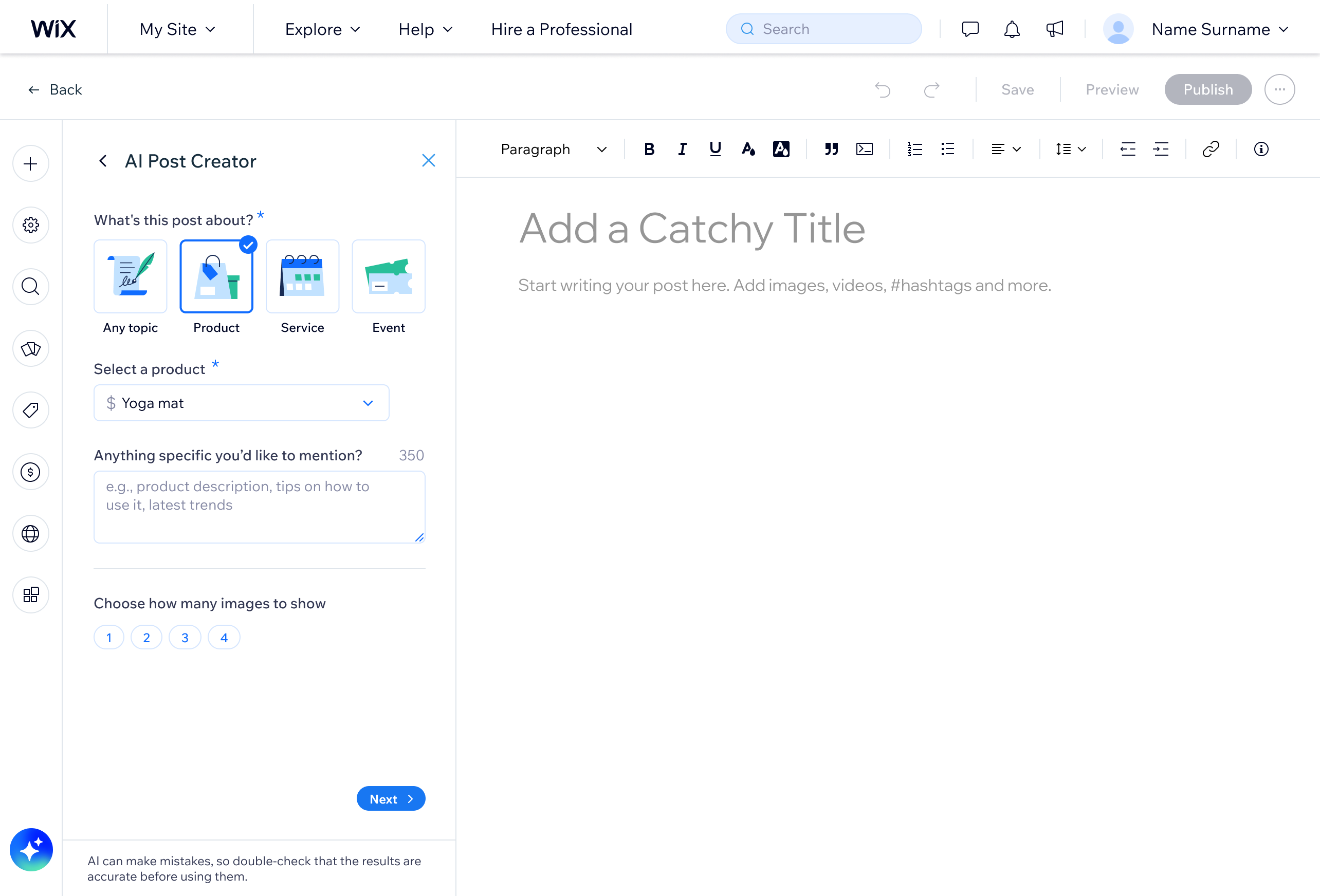
A post on any topic, a post based on an existing entity on their site (such as a product, service, or event), or a full article versus just an outline.
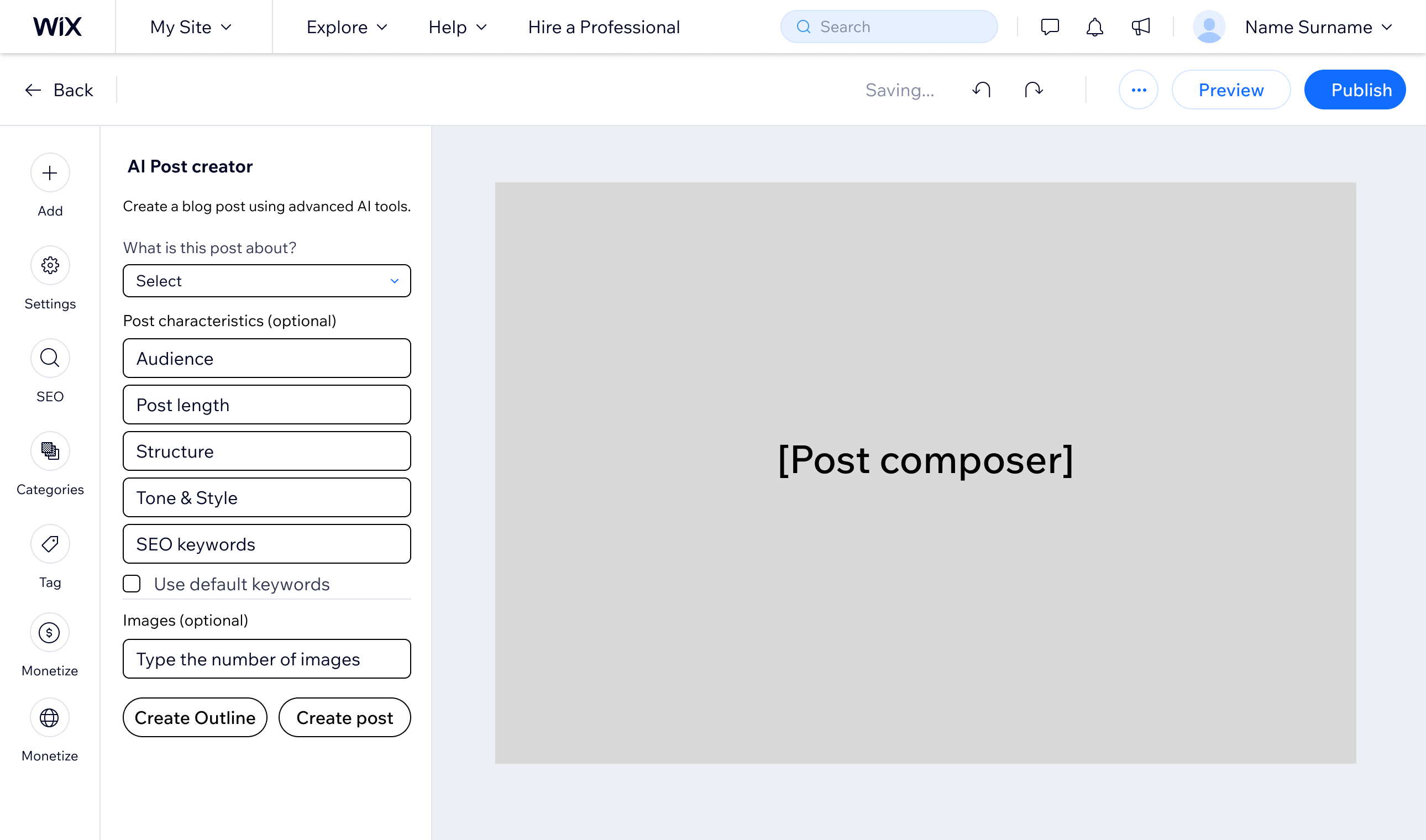
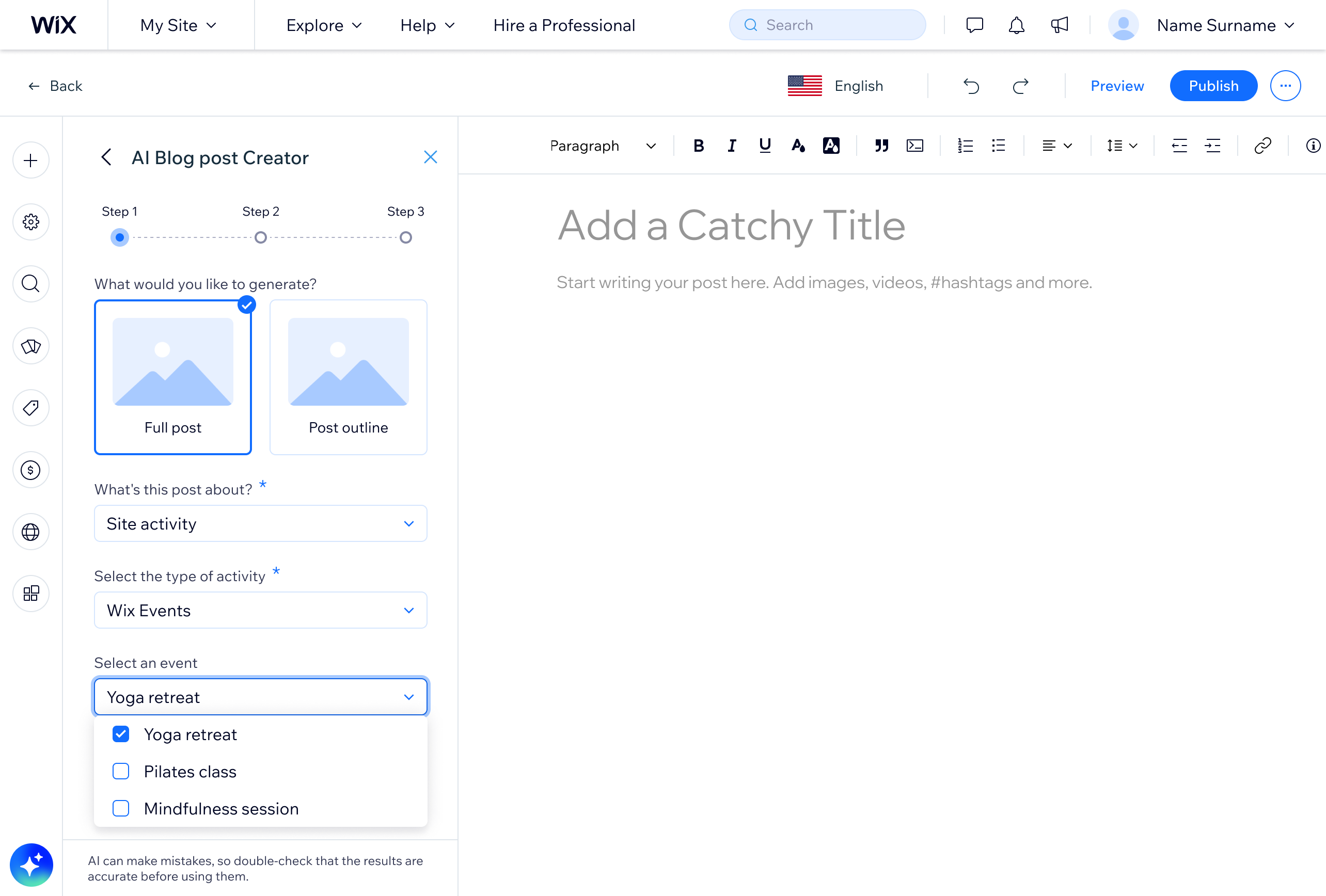
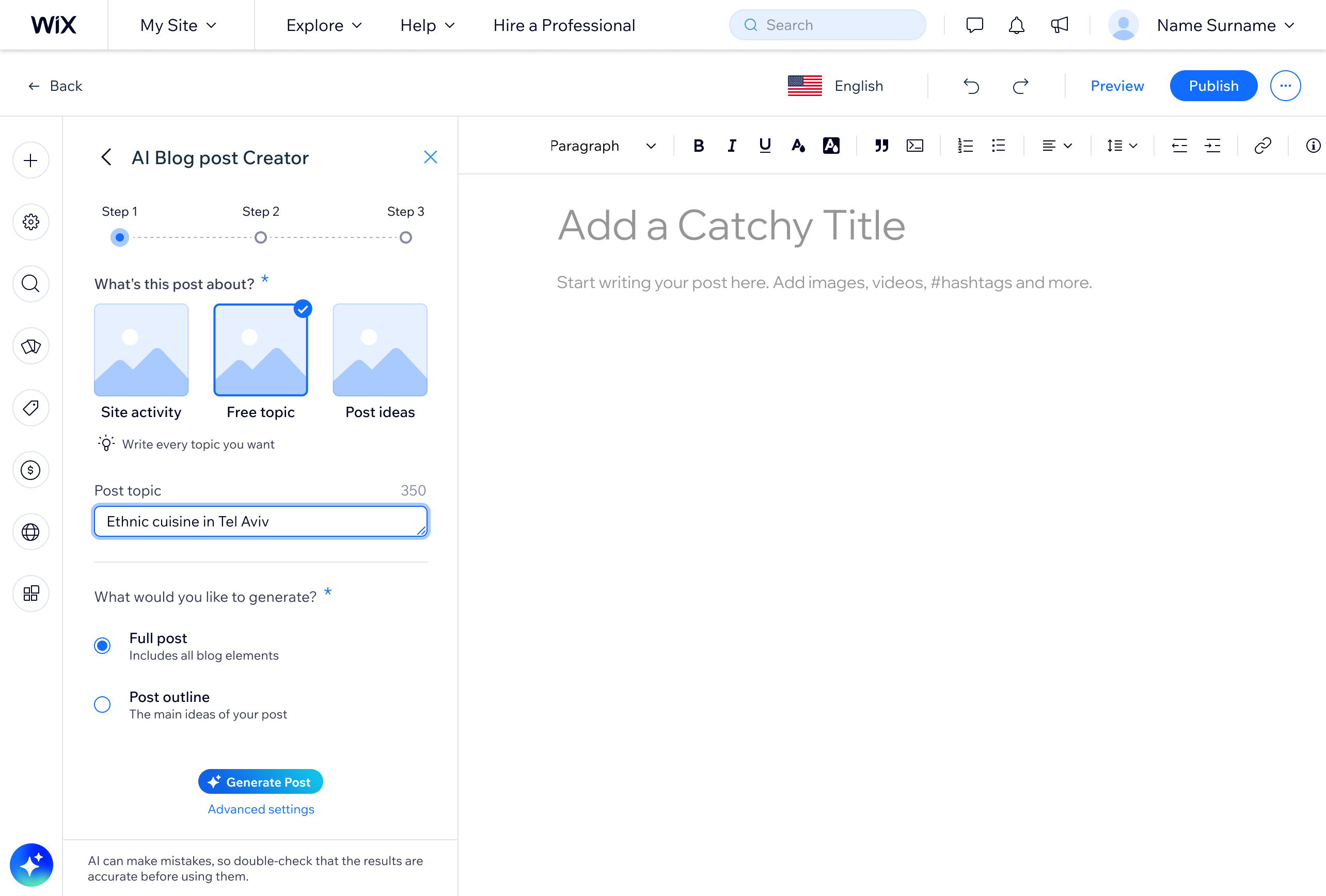
Eventually, I decided to separate the experience into two distinct tools: one for creating a full blog post and one for generating a blog outline.
Since users had different goals, from drafting complete posts to seeking inspiration, this decision made the experience clearer and more intuitive.
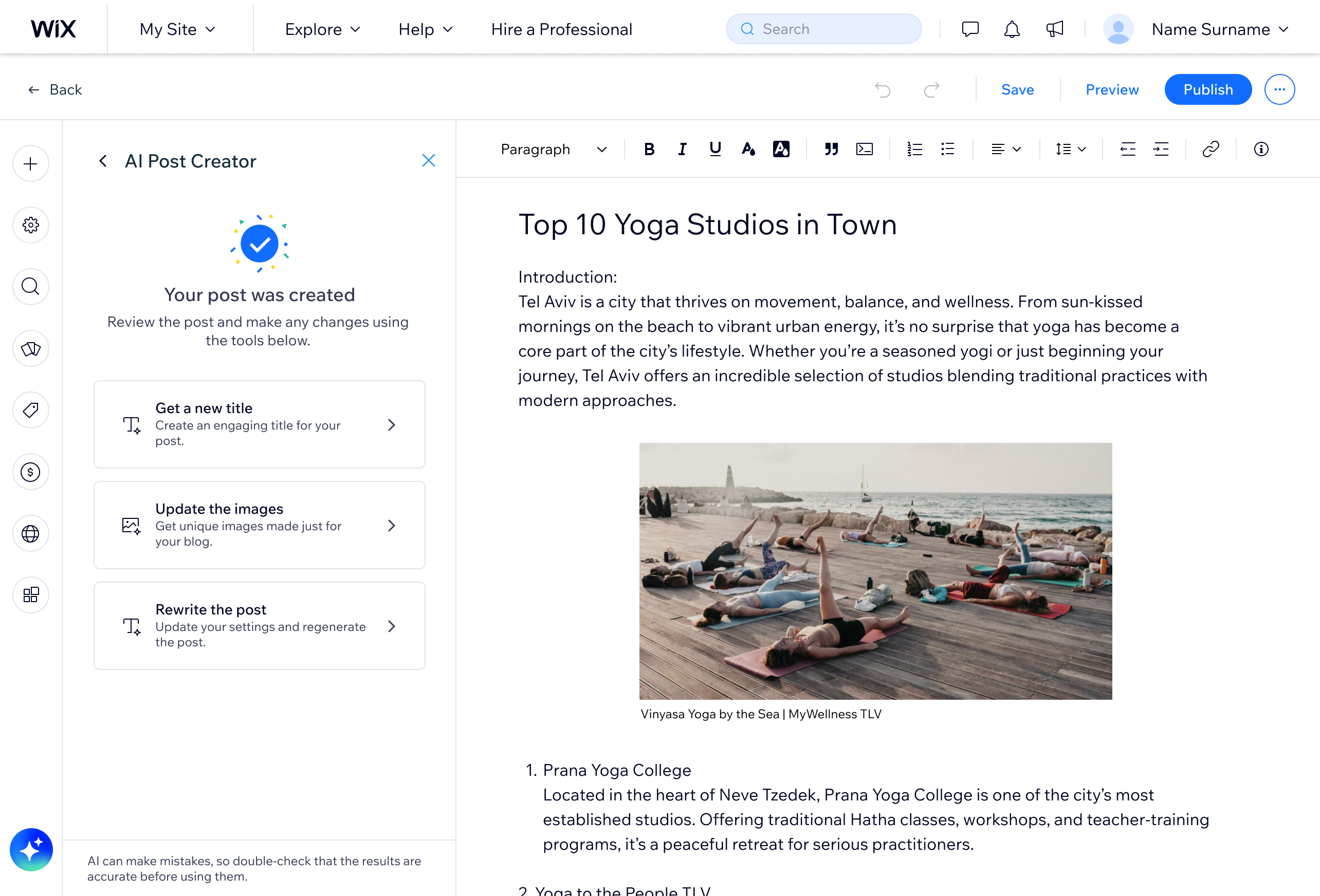
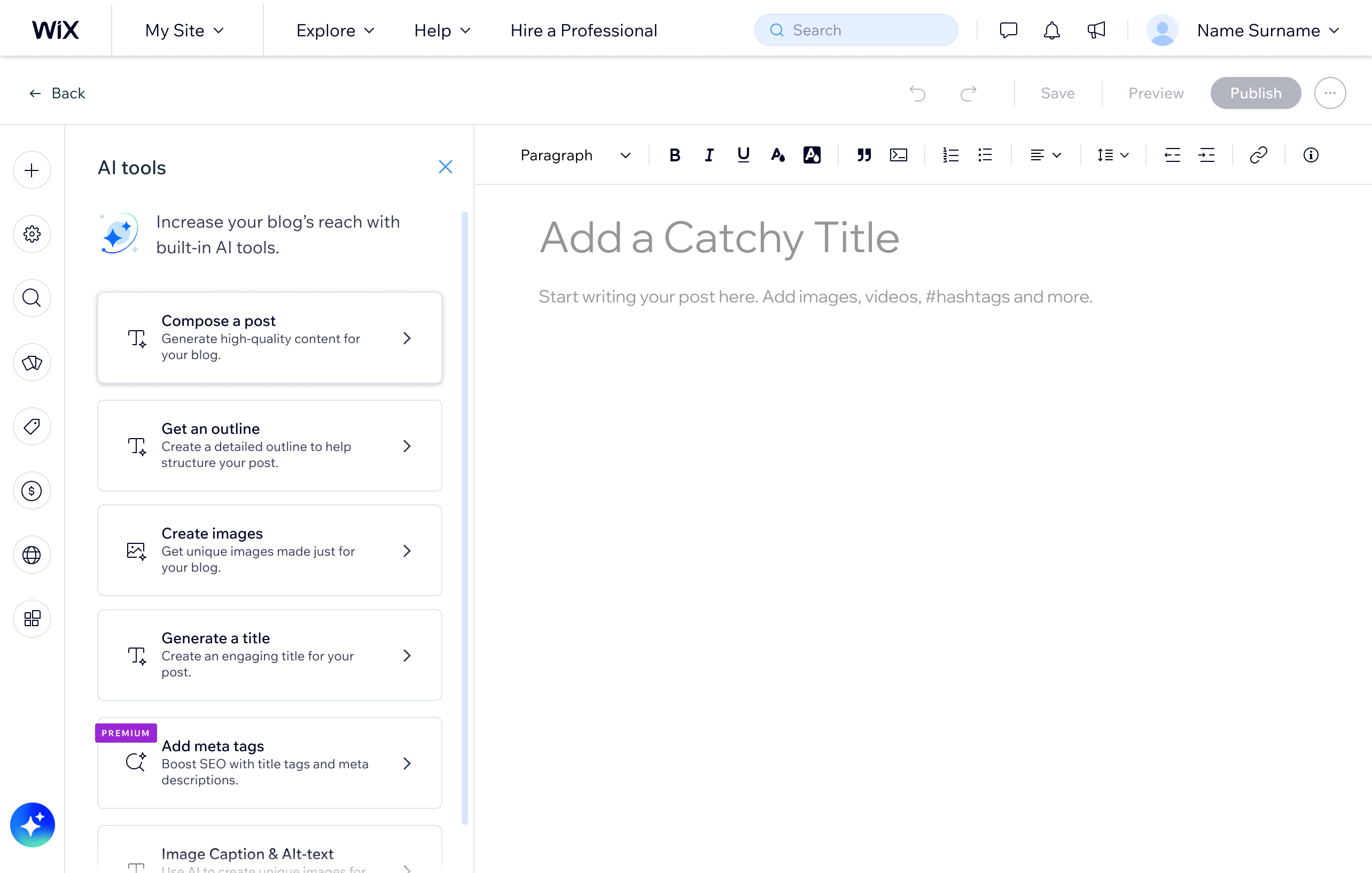 1Full blog post
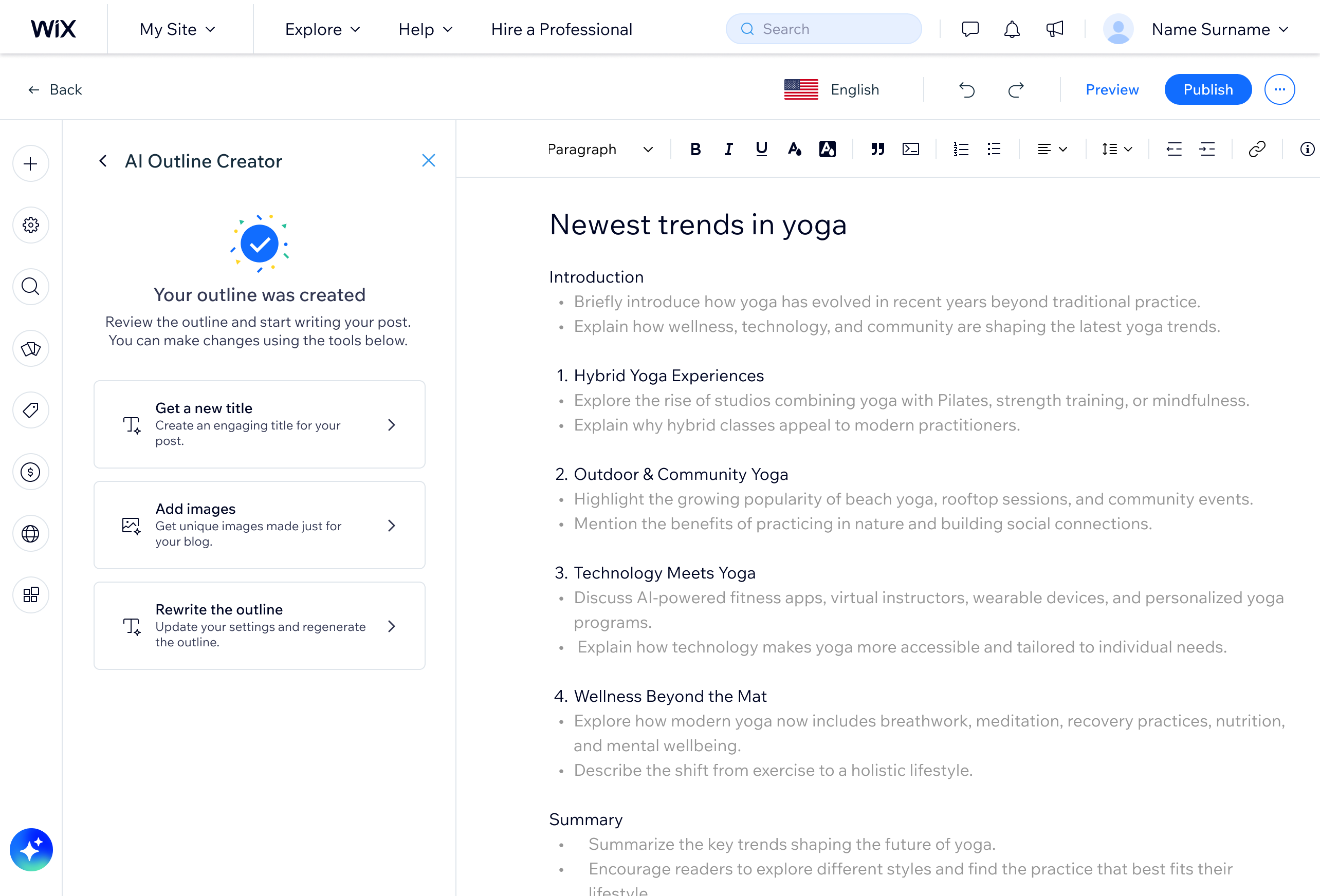
2Blog outline
The Solution
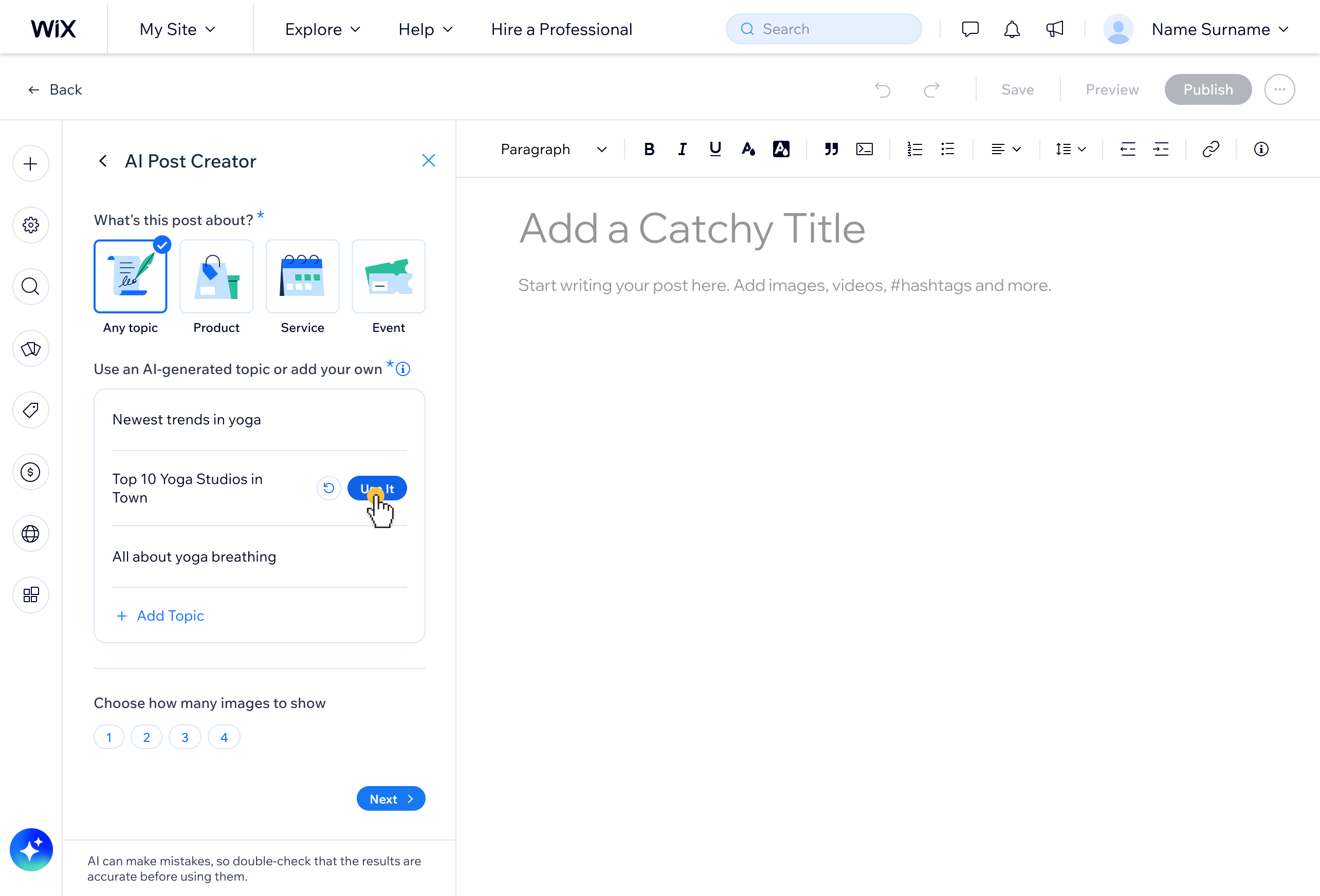
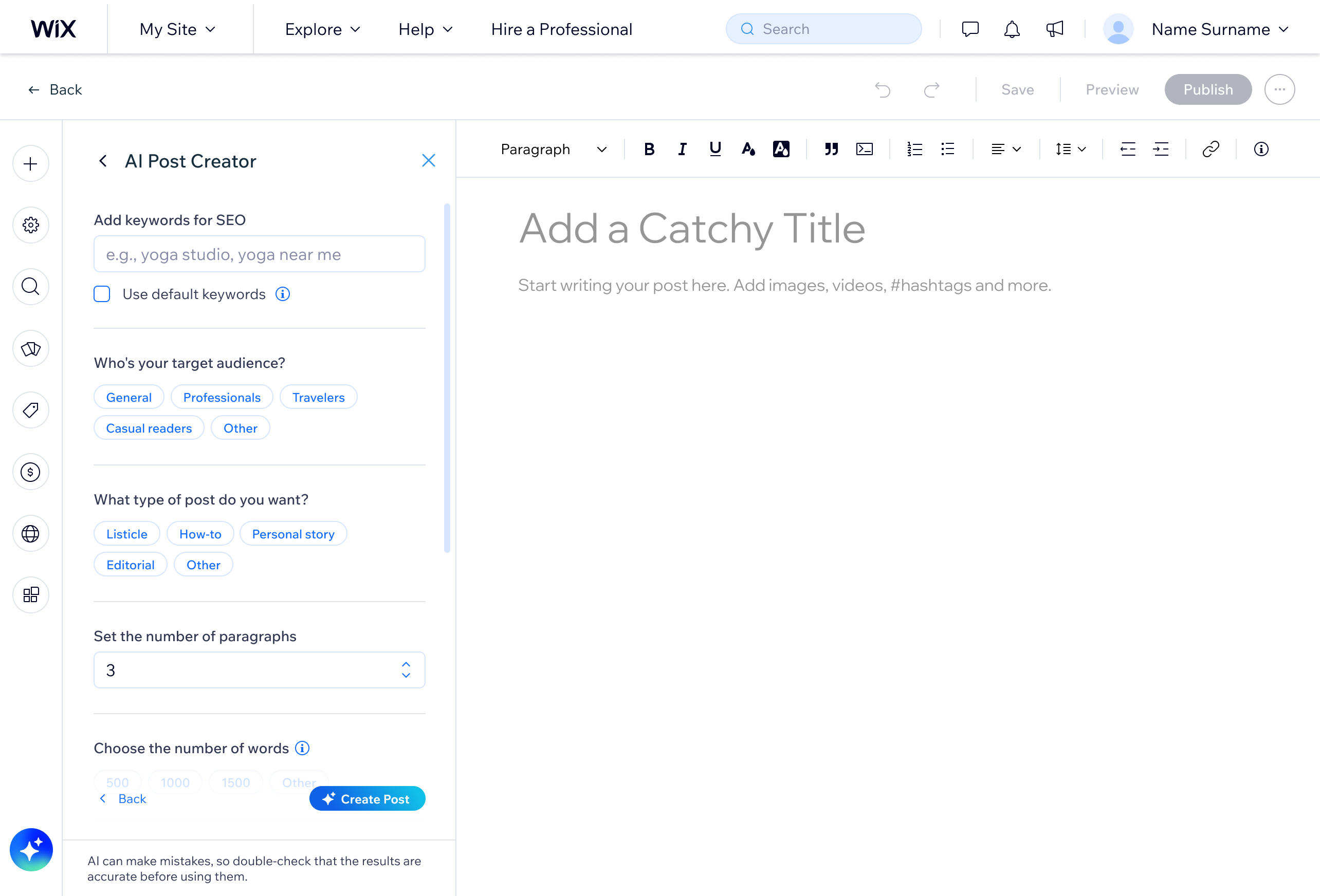
I designed the experience as a two‑step wizard embedded directly in the blog environment.
At the time, many users were still unfamiliar with generative AI and unsure how to formulate effective prompts. Instead of relying on an empty prompt field, I guided them through quick decisions around topics, SEO, audience, tone of voice, and post length. This reduced cognitive load and helped build confidence in the experience.
I also recognized that AI‑generated results wouldn’t always be a perfect match. To make the experience more forgiving, users could swap suggested topics and refine their preferences without having to start over.
Although the interaction felt simple, every choice users made contributed to the prompt behind the scenes, allowing us to deliver tailored results without requiring users to become prompt experts.
Project Impact
From a blank page to a published post.
Overall, the data supports the conclusion that the full post generator successfully lowers the barrier to creating polished blog content and plays a valuable role in helping users publish more confidently and efficiently.